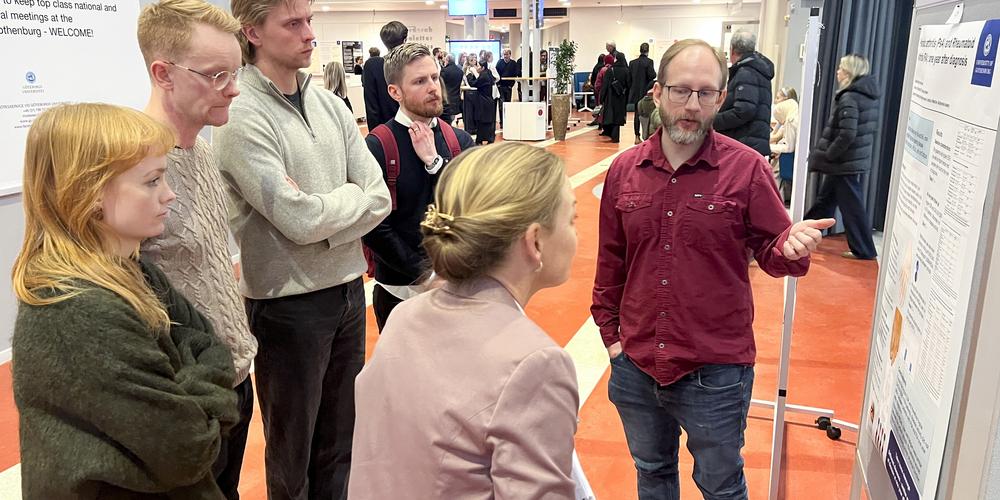
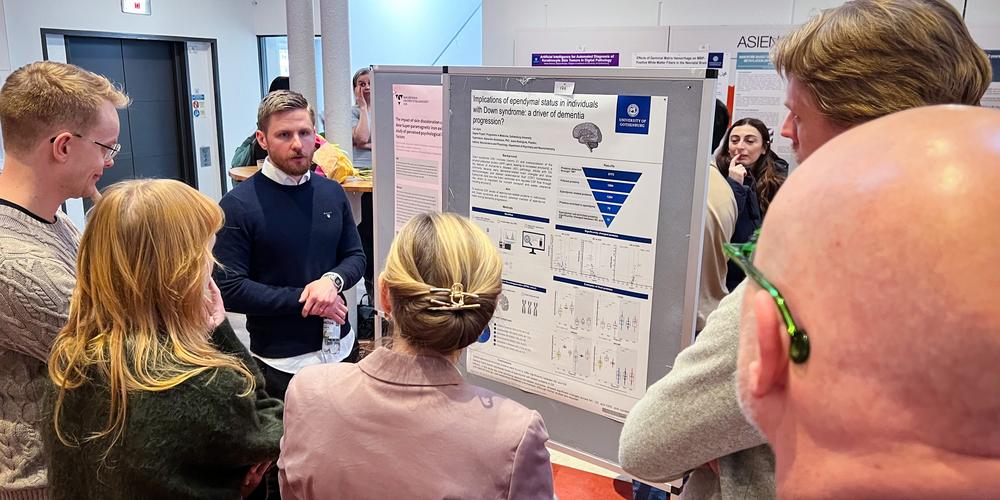
Outstanding student research at the medical programme’s final poster exhibition
This year’s degree projects in the medical programme spanned fields ranging from bioinformatics and genetics to orthopaedics and registry-based research. The poster exhibition concluded with a festive reception and an awards ceremony.
Among the prize-winning projects was Robert Khashan’s degree project on acute lymphoblastic leukemia (ALL) in children, which received the students’ choice award.
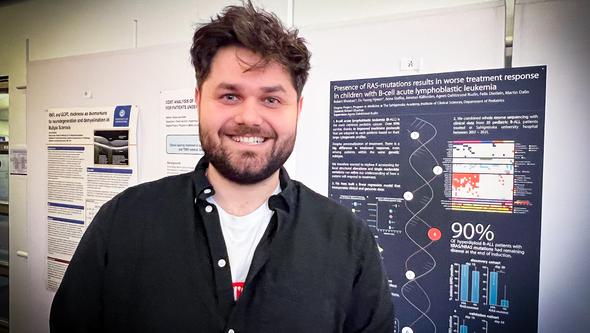
The study is based on data from 35 children, combining genetic and clinical data to develop an algorithm. Using this approach, the study identified a gene variant that can distinguish children who respond more slowly to treatment. This opens up the possibility of offering less aggressive therapy to this group, while reserving more intensive treatment for those who need it most. The project was carried out at Harvard Medical School in the United States and is based on Swedish patient data. The results will be presented in a scientific journal, and Robert will then continue toward doctoral studies after completing his medical degree.
Vilma Snygg presented her degree project on overcrowding in emergency departments and referrals from primary care to emergency care. The study examines situations in which patients seen in primary care are assessed as needing acute hospital care, receive a referral, and are directed to the emergency department.
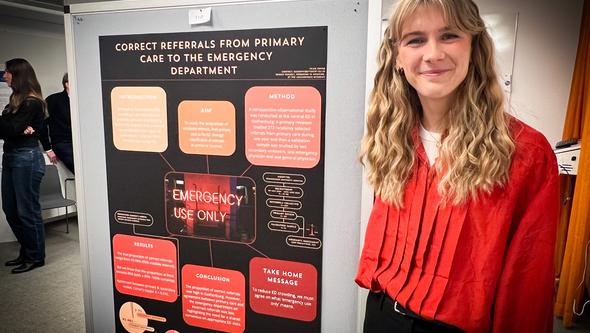
The project analyzed 273 randomly selected referrals from primary care to the Sahlgrenska emergency intake over the course of one year, which were assessed by both an emergency physician and a primary care physician. The results showed that approximately 95 percent of the referrals were judged to be appropriate, suggesting that during the study period and at this specific emergency department, referrals from primary care were not the primary driver of overcrowding. At the same time, the physicians often made different assessments of the same cases, highlighting the need for clearer and more consistent criteria for when patients should be referred to emergency care.
Mariam Ali presented a large registry-based study on equity in epilepsy care. The project is based on data from more than 78,000 patients with epilepsy and analyzes differences in access to epilepsy care by gender, income, country of birth, and region.
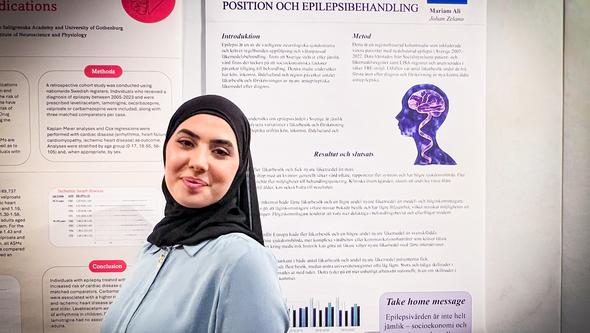
The results show that women generally had more physician visits than men during the first two years after diagnosis and were more likely to receive newer medications. The factor with the greatest impact on care, however, was the region in which the patient lived, with patients in regions that have a university hospital having greater access to modern treatment. The results will be presented in a scientific journal.
Four awards
A total of four awards were presented during the day. Agnes Patriksson received the award in global health, Hanna Sandberg Ivemo was given the course leaders’ choice award, Robert Khashan received the students’ choice award, and Mofid Al Jafar was awarded the Swedish Medical Society’s award.
The last poster exhibition
The poster exhibition is a festive occasion and an opportunity to pause, engage in conversation, and share results.
“It feels a bit bittersweet that we have now held the final poster exhibition with our medical students’ degree projects. It has been a very nice way to highlight the work the students have done,” says Sofia Moverare Skrtic, Professor and course coordinator for term 10.
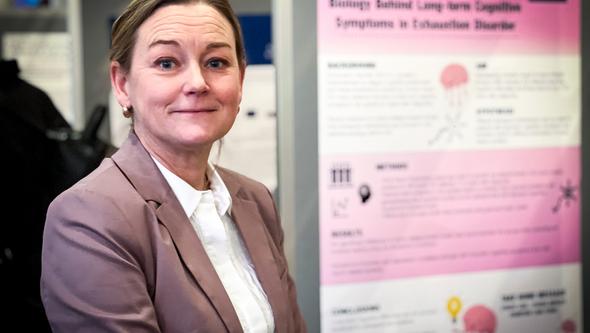
Although the poster exhibition has been a valued component of the medical programme, it has also been difficult to quality-assure as an examination format. The day has additionally required significant resources. The change in examination format is also intended to better reflect developments in academic work and new technical conditions.
“We need examination formats that are robust, fair, and adapted to ongoing developments, not least when it comes to generative AI,” says Sofia Moverare Skrtic.
The degree project remains part of the six-year medical programme. Oral presentations as an examination component will be strengthened and carried out in a more structured way over three days with course leadership and examiners present.
A scientific approach runs throughout the medical programme, but the creation of a scientific poster is no longer included as a required component.